What Manual Review Gets Right
Before going into limitations, it is worth being clear about what experienced inspection engineers do well. A skilled surveyor reviewing ROV footage can identify active corrosion zones, assess visible cracking with a trained eye, and flag obvious marine growth obstructing inspection surfaces. For major structural anomalies, the human reviewer is reliable. The defect is large, visually distinct, and the reviewer notes it.
The challenge is not with obvious defects. It is with everything that sits below the threshold of immediate visibility, and with the way subtle signals accumulate across time and across survey cycles.
The Attention Problem in Long Footage Runs
A typical North Sea monopile foundation survey generates six to ten hours of ROV footage. The reviewer must watch that footage, maintain attention, and log anomalies as they appear. Sustained attentional vigilance over that duration is genuinely difficult. Research on vigilance tasks consistently shows performance degrades after 30 to 40 minutes of continuous monitoring. After hour three of reviewing murky underwater footage, a reviewer is not applying the same detection quality as they were in hour one.
This is not a criticism of individual reviewers. It is the nature of the task. The same challenge applies to any sustained monitoring job, from air traffic control to radiological image reading. The issue is that offshore inspection rarely builds in the task rotation or structured break cadence that vigilance research suggests is necessary to maintain detection reliability. Most operators schedule the review and expect consistent output across the full footage run.
The practical result is that defects appearing in the second half of a long footage run are somewhat less likely to be flagged than identical defects appearing in the first half. This is not well-documented in industry literature partly because nobody has run a controlled study on it. But we see the pattern in our early-access cohort: when we run detection on footage that has already been manually reviewed, the distribution of newly identified anomalies by footage position tends to skew toward the back half of the recording.
Cross-Frame Pattern Detection
Single-frame review is the effective unit of manual inspection. A reviewer sees a frame, assesses it, moves on. When a defect is visually present in a single frame, they can flag it. The problem is that many early-stage subsea corrosion manifestations are not contained in a single frame. They are patterns that emerge across sequences of frames.
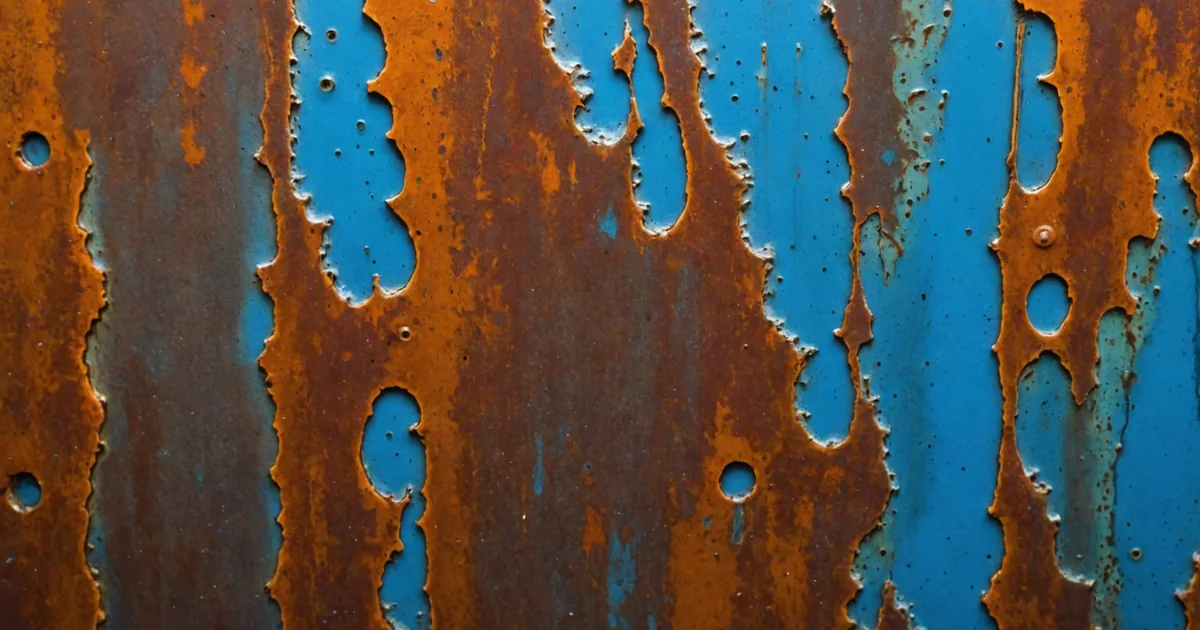
Consider surface pitting that begins as small discrete spots of corrosion product. In any individual frame, each spot looks minor, perhaps within acceptable tolerance for its classification. Across 40 frames of continuous footage over the same surface area, those spots are clustered at a density and in a distribution that indicates a through-coat corrosion mechanism beginning to establish. No single frame triggers the flag, but the ensemble pattern does.
Human reviewers can, in principle, track patterns across frames. But when reviewing at the pace required to cover eight hours of footage within a reasonable project schedule, maintaining that cross-frame awareness is difficult. The reviewer is moving forward through the footage, not continuously cross-referencing the prior 40 frames while simultaneously watching the current one.
Computer vision operates differently here. A model trained on frame sequences can hold prior frames in context and flag when the cumulative pattern across a window of frames exceeds a condition threshold, even when no individual frame does. This is sequence modelling, and it is a task format where consistent automated attention genuinely outperforms human vigilance over long footage runs. The model does not get fatigued, and it applies the same detection criterion to frame 4,200 as it did to frame 100.
Cross-Survey Comparison
The hardest thing to do in manual review is compare the current survey against the previous one, location-matched. An experienced reviewer might remember that a specific foundation had a corrosion zone on the south face at the mudline last year. They might even pull up last year's report to cross-reference. But this is not a systematic process. It depends on the reviewer's memory, on access to prior records, and on the time available for the review engagement.
In practice, most manual review is conducted on the current footage in isolation. The reviewer assesses what they see now. Unless a prior anomaly was severe enough to be formally tracked in the maintenance system, longitudinal comparison typically does not happen frame-by-frame.
This is where a persistent, frame-referenced anomaly database changes the nature of the review. When each foundation has a structured anomaly record from prior surveys, the current survey analysis can be automatically compared against those records. A corrosion zone that grew by 15 percent between surveys, or a cathodic protection wear indicator that moved from early-stage to moderate, becomes visible as a change rather than a static observation. The shift from "there is corrosion here" to "this corrosion zone has grown at this rate since the last survey" is what turns inspection data into maintenance planning intelligence. Manual review, without that systematic comparison infrastructure, produces observations. Structured detection with cross-survey linkage produces trends.
Systematic Coverage Documentation
One underappreciated limitation of manual review is what happens when nothing is found. A manual reviewer who inspects a foundation zone and observes no anomalies writes nothing, or writes "no defects observed." The record of absence is weak evidence. There is no structured documentation that coverage was systematic, that lighting conditions were adequate for detection at that location, or that the review methodology applied to that section was consistent with how other sections were reviewed.
This matters for compliance. A regulator or class surveyor reviewing inspection records wants to know not just what was found, but that the methodology was sound enough to have found it had it been present. Manual review creates an inherent documentation asymmetry: defects generate records, but the quality and coverage of the review process itself does not generate a comparable record.
Automated frame-level detection creates a coverage record by default. Every frame processed generates a log entry. The absence of detections in a specific location code means the system processed that area and found nothing, with a confidence score and frame reference attached. That is a substantively different evidentiary basis than a notation saying "inspected, no defects." The distinction is increasingly relevant as offshore wind operators prepare for more formal class surveillance cycles under MCA and Lloyd's Register frameworks.
Where This Leaves the Inspection Engineer
This is not an argument that manual inspection engineering is obsolete or that automated detection should operate without human oversight. Experienced inspection engineers bring judgment that no current detection system fully replicates: knowledge of asset history, ability to assess context that falls outside training categories, understanding of structural loading patterns, and professional accountability for signing off a compliance document.
What we are observing is that manual video review, as a process, has structural limitations at the frame-attention and cross-frame-pattern levels that are not compensated for by reviewer experience alone. The task format works against the reviewer in ways that have nothing to do with skill. Automation assists precisely in those areas: sustained frame-level attention, pattern detection across sequences, and systematic cross-survey comparison against prior records.
The practical result is a reallocation of engineering effort. Instead of spending two days watching footage, an engineer spends a few hours reviewing structured findings. They verify the detections that matter, apply professional judgment to edge cases, and sign off on a report that has already been drafted from the detection output. Their expertise is applied where it is genuinely irreplaceable, rather than being consumed by the mechanical process of watching video at 1x speed.
When a typical offshore wind operator runs 20 to 25 foundation surveys per campaign, the cumulative difference between a manual-review workflow and a detection-assisted workflow is not marginal. It is the difference between a 12-week reporting lag and a 2-week one. The engineering hours are the same size team; the work they are doing within those hours is what changes.